
The Circle: Why Women Leaders Need Each Other
Leadership can feel lonely even when you are surrounded by people. As a woman in school leadership, I have felt the quiet weight that comes with holding both the vision and the emotions of a community. What has carried me through has never been a new system or initiative. It has been the women who stand beside me. The circle.
The circle is not a formal network or another meeting on the calendar. It is a small group of women who tell the truth, celebrate progress, and remind you who you are when the week tries to make you forget. It is the space where you can admit that something feels heavy and hear, “You are not alone.”
I am a principal, a mom, a wife, a doctoral student, and a writer. I cannot do this work in isolation. My circle keeps me grounded, honest, and hopeful. We share resources. We share stories. We share the work of caring for others while caring for ourselves. When one of us struggles, the others step closer.
Recent research confirms what many women leaders already know intuitively: connection is not a luxury. It is essential for growth and sustainability. A 2024 study of women’s communities of practice found that small, peer-based groups built on trust and shared reflection strengthened confidence, problem-solving, and professional identity (Bone et al., 2024). Another study showed that when women educators meet in “brave spaces,” they develop stronger voices, more authentic collaboration, and greater professional confidence (Cunningham & Garvey, 2025). An article from the National Association of Elementary School Principals identified mentoring, networking, and self-care as the three most critical supports for sustaining women in leadership (NAESP, 2024).
These findings echo what I see every day. Women leaders thrive when they connect with others who understand the complexity of their work. These networks not only protect well-being but also strengthen schools through shared purpose and perspective.
Researchers call this relational leadership…the idea that leadership grows through trust, respect, and connection rather than control (Uhl-Bien, 2006). Studies on collective efficacy show that when groups believe in their shared ability to make a difference, schools perform better (Bandura, 1997; Goddard, 2000). When women come together to share their experiences and strengths, they are not simply supporting one another. They are building a shared sense of purpose that strengthens entire communities.
This idea connects closely to communities of practice, a model developed by Etienne Wenger and William Snyder (2000), which describes how professionals learn through conversation and shared reflection. Circles like these turn support into strategy. They transform connections into professional growth.
There is also growing recognition that relational well-being is a pillar of sustainable leadership. Rita McHugh’s Framework of Occupational Well-Being (2023) and OECD’s global research on educator well-being (2024, 2025) both highlight the quality of professional relationships as one of the strongest predictors of leader health, motivation, and retention. The circle meets that need directly. It transforms connection into clarity and belonging into balance.
Here are a few ways to create a circle that builds both well-being and leadership strength.
Start small and be intentional.
Invite two or three women whose presence feels genuine and kind. Choose women who value honesty, curiosity, and growth. Different perspectives make your conversations richer.
Name the purpose clearly.
Say what the circle is for. Encouragement. Reflection. Courage. Growth. Connection. Clarity of purpose keeps the time meaningful.
Protect the time.
Meet regularly, even briefly. Forty-five minutes every other week can shift the tone of your leadership and remind you that you are not doing this work alone.
Structure the reflection.
Ask three simple questions: What is working? What feels heavy? What is one next step? End by choosing one word to carry into the week such as calm, hope, or focus.
Create psychological safety.
Amy Edmondson’s research indicates that teams learn most effectively when individuals feel safe enough to speak openly (Edmondson, 1999). Protect confidentiality, listen without judgment, and ask before offering advice.
Celebrate success.
Women often move quickly past what went well. Take time to notice it. A difficult conversation handled with care. A student breakthrough. A staff meeting that left people inspired. Naming success builds confidence and keeps purpose alive.
Extend the impact.
Once your circle feels grounded, mentor an emerging woman leader together. Research continues to show that mentoring and sponsorship directly improve women’s confidence, satisfaction, and retention in educational leadership (Ely, Ibarra, & Kolb, 2011; NAESP, 2024). Each new connection widens the path for others.
What the circle offers is more than encouragement. It is a professional learning model that turns reflection into insight and connection into action. It strengthens emotional health, builds leadership capacity, and reminds us that strength grows through community, not competition.
If you are reading this and wishing you had a circle, start one. Send the first message. Invite two women for coffee. Share this post as your beginning. Start small. Start soon.
When women lead together, schools change. Teams grow stronger. Students feel the difference. The circle is not a luxury. It is how we last. It is how we lead. It is how we keep our hearts in the work and our eyes on what matters most!
References
Bandura, A. (1997). Self-efficacy: The exercise of control. W. H. Freeman.
Bone, E. K., Huber, E., Gribble, L., Lys, I., Dickson-Deane, C., Campbell, C., Yu, P., Markauskaite, L., Carvalho, L., & Brown, C. (2024). A community-based practice for the co-development of women academic leaders. Studies in Continuing Education. Advance online publication.
Cunningham, R., & Garvey, P. (2025). Communities of practice as “brave spaces” for women teachers. Teachers and Teaching: Theory and Practice. Advance online publication.
Edmondson, A. C. (1999). Psychological safety and learning behavior in work teams. Administrative Science Quarterly, 44(2), 350–383. https://doi.org/10.2307/2666999
Ely, R. J., Ibarra, H., & Kolb, D. M. (2011). Taking gender into account: Theory and design for women’s leadership development programs. Academy of Management Learning & Education, 10(3), 474–493. https://doi.org/10.5465/amle.2010.0046
Goddard, R. D. (2000). Collective teacher efficacy: Its meaning, measure, and impact on student achievement. American Educational Research Journal, 37(2), 479–507. https://doi.org/10.3102/00028312037002479
McHugh, R. (2023). A six-component conceptualization of the psychosocial well-being of school leaders: Devising a framework of occupational well-being for Irish primary principals [Doctoral dissertation, Hibernia College]. Hibernia College Repository.
National Association of Elementary School Principals. (2024, January 8). Slowly climbing the leadership ladder. Principal Magazine. https://www.naesp.org/resource/slowly-climbing-the-leadership-ladder
Organisation for Economic Co-operation and Development. (2024). Teachers’ well-being: A framework for data collection and analysis (Education Working Paper No. 213). OECD Publishing.
Organisation for Economic Co-operation and Development. (2025). Results from TALIS 2024. OECD Publishing.
Uhl-Bien, M. (2006). Relational leadership theory: Exploring the social processes of leadership and organizing. The Leadership Quarterly, 17(6), 654–676. https://doi.org/10.1016/j.leaqua.2006.10.007
Wenger, E. C., & Snyder, W. M. (2000). Communities of practice: The organizational frontier. Harvard Business Review, 78(1), 139–145.
The Hidden Curriculum of Leadership: Modeling Emotional Regulation for Staff and Students
Leadership is emotional work. Every tone, pause, and response teaches something about how we handle stress and connection. When leaders model calm and compassion, they strengthen the culture around them and remind others that real leadership begins with awareness, empathy, and courage.
Every day as a principal, I am reminded that leadership is emotional work. The hallway conversations, the student conflicts, the moments when teachers need reassurance all carry weight. What I model in those moments matters just as much as what I say. The truth is that we teach emotional regulation long before we ever use the term. Our tone, our body language, and the pauses between words become lessons for the people we lead.
Through experience, I have learned that calm is contagious. When I center myself before a difficult conversation, I can feel the energy shift in the room. That awareness did not come naturally. It came from moments when I reacted too quickly, when my own frustration took the lead, and I saw the impact ripple through others. Leadership, especially in schools, demands emotional steadiness not because perfection is expected, but because people look to us for cues on how to respond to uncertainty.
Research continues to show what many of us know intuitively. Emotional intelligence is foundational to healthy schools. Studies on leadership and well-being highlight that when leaders regulate their emotions effectively, staff stress decreases and collective trust increases. Daniel Goleman and Marc Brackett have both emphasized the power of emotional awareness. Brackett’s RULER framework shows that recognizing, understanding, labeling, expressing, and regulating emotions leads to stronger relationships and more effective learning environments. When leaders embody these skills, they create cultures where people feel safe enough to be human.
In my own school, I have seen how this plays out. When teachers feel supported, they extend that same patience and empathy to students. When I take time to listen rather than rush to fix, it communicates that emotional honesty is not a weakness. It is part of the work. Our ability to lead with emotional intelligence does more than reduce stress. It transforms the way our communities function.
Here are a few practices that have helped me strengthen emotional regulation in leadership.
Create intentional listening time. I block a few minutes after meetings to truly hear what people are saying, not just what they report. I resist the urge to multitask or plan my response. This builds trust faster than any initiative ever could.
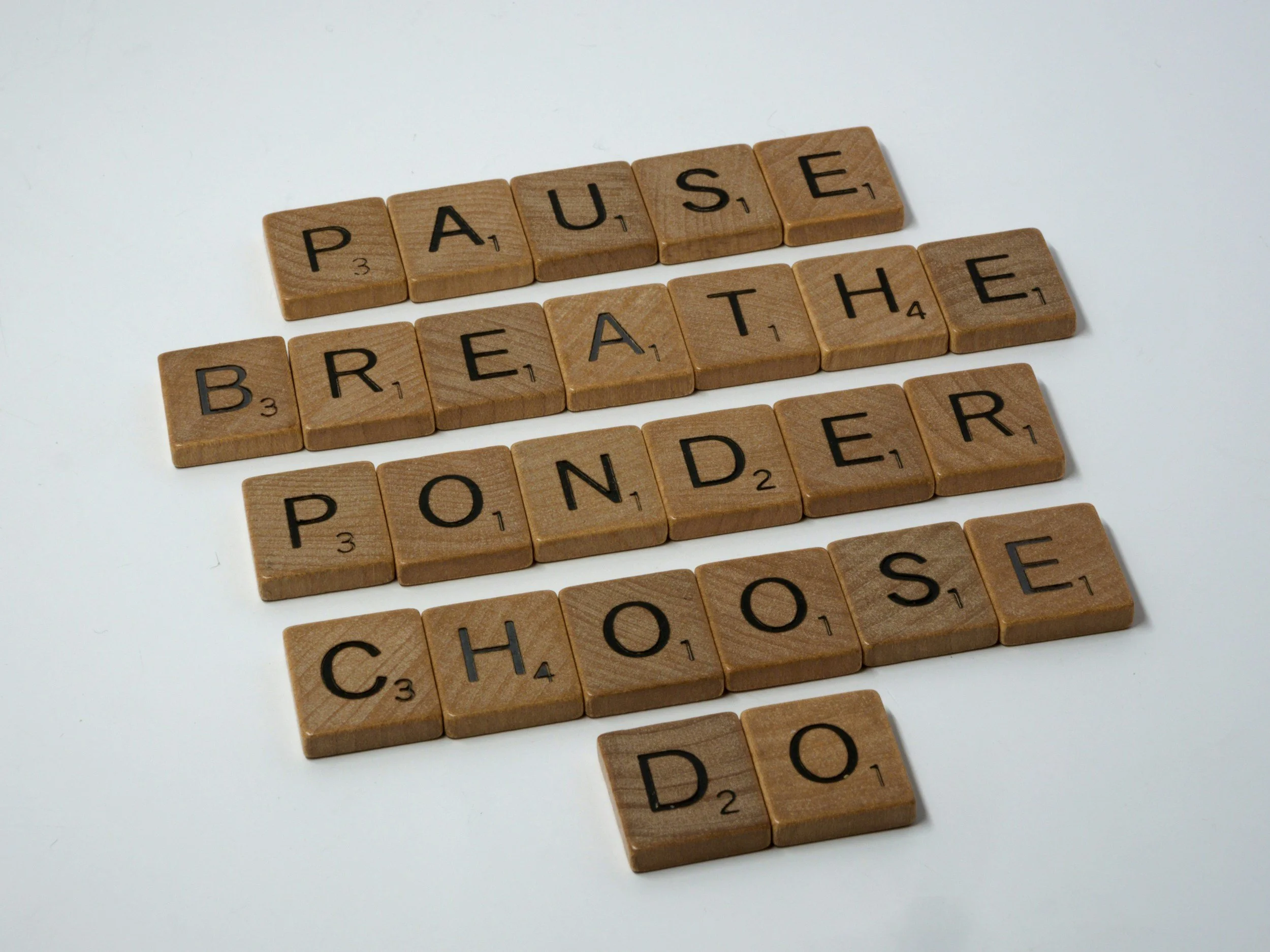
Pause before responding. I use what I call the two-breath pause. The first breath is to notice what I am feeling and the second is to choose how to respond. That small space between reaction and response has preserved many relationships.
Model emotional transparency. When I acknowledge a hard day or share that I need a moment to regroup, it gives others permission to do the same. It is not about vulnerability for its own sake. It is about modeling balance.
Integrate emotion skills into adult spaces. Quick mood check-ins at staff meetings or reflection prompts in PLCs remind everyone that emotional awareness belongs in professional settings, too.
Protect your own regulation. Leadership often means absorbing the emotions of others. I have learned that I cannot lead well when I am depleted. Stepping outside between meetings, taking a short walk, or finding a quiet minute to breathe is not self-indulgent. It is leadership maintenance.
Emotional regulation is not about control. It is about awareness. The most powerful leaders I know are not the loudest or the most unshakable. They are the ones who stay grounded when things get hard, who make people feel safe enough to be honest, and who remind us that empathy and excellence can coexist.
Each moment we choose presence over reaction, we strengthen the culture around us. When we lead with calm and compassion, we do more than guide a school. We show others what it means to lead with heart and courage, and that is what lasting leadership looks like.